To provide some perspective on the question of how to find your professional niche as a photographer, here is my story.
I got started in photography on a whim, basically. I needed an elective while in community college and thought photography sounded fun and took the beginning class. I didn't know anything about photography. I brought a little point-and-shoot camera on the first day and was told I had to get an SLR for the class!
|
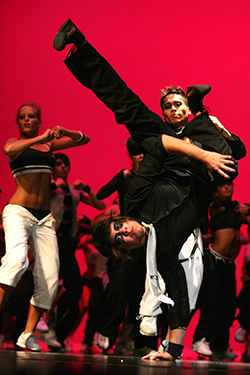
Some of my first photo shoots were dance perfomances. |
I enjoyed the class and started taking photos in my spare time. When I transferred to a university, I was not sure what I wanted to major and was encouraged by the art department head to try out photography. I continued to enjoy it and kept it as my major. I started working for the school newspaper and that's where I was able to pick up some event experience. I got to shoot the musical acts that came to perform on campus, sporting events, and an occasional banquet or party.
I was fortunate to build up a little bit of an event portfolio to start getting work with. To balance this out, I offered my services, for free at times, to pick up the experience and develop some portfolio pieces. As a pro bono project, I shot photos for a friend's dance company. That was really challenging but I would go often and shoot a lot and built up a nice dance portfolio. I would have friends ask about shooting their families' weddings. At the time I was so inexperienced I would only charge a few dollars, so that the clients understood I was still learning.
How did I know what I would be good at shooting? I decided what I wanted to be good at and practiced it. I have always liked shooting people, whether I am doing portraits or events. So I keep lining up opportunities to photograph people and events.
A big factor for me in getting into event photography was knowing that people are always going to get married, have parties, play concerts, and play sports. It's a wide genre where I knew there'd be jobs to be had. I'm also a sports fan and love live music, so I was eager to get into shooting those types of events.
If you have an interest in shooting a specific genre or type of event but feel under-qualified, find a similar field where the expectations won't be as high and get some practice in.
OK, let's now discuss some ways of promoting yourself.
Business Cards and Web Sites
To start, let's go over the very basics. Always carry professional-looking business cards. It doesn't look like you're very prepared for jobs if you aren't prepared for a chance encounter with a potential client.
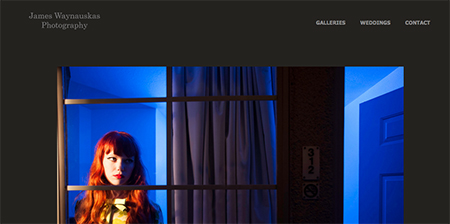
These days, you must have a Web site and it must look professional. Invest the money to buy your own domain name, and work with a designer or site-builder service to create a well-designed site. Your Web site is what a storefront used to be. It needs to be organized and professional so people will take you seriously.
If you create a site to get event photography work, make sure to show photos that are in the area of work you are hoping to get. Don't expect to book weddings if all you have are sports photos.
Curate your work carefully. Your portfolio is only as good as your weakest image. Don't include subpar images to show versatility, as it will only reflect negatively on you.
Word of Mouth
Word of mouth is one of the oldest forms of marketing, and it's still one of the most effective. When you are starting out, it's good to work as much as you can. I understand the desire to be picky about jobs and pay, but also remember that anytime you shoot a job, you are actually showcasing yourself to everyone else in attendance.
It's important to do good work and also make a good impression. Be friendly, and make small talk. Clients should feel like you are a friend who happens to be shooting their event. At the same time, remember you can't please everyone. There are going to be times when clients are unreasonable, rude, and over demanding. I hate to say it, but you just have to take it with a smile. Any negative words from a past client can be very damaging.
Customer Reviews
Reviews are quite possibly the most helpful and damaging resource for photographers. Positive reviews reassure possible clients that you will be a good choice, and negative reviews cause them to pass on your services. Even a single negative review can be damaging.
I have been shooting weddings for ten years, and in 2008 I received a bad review on a major site. It was a situation where there was an unreasonable client with impossible expectations given the circumstances. As recently as last year, I was still receiving questions about that review!
If you have enough strong reviews to balance out a negative one, clients will usually give you the benefit of the doubt or at least ask you to explain what happened. If you are just starting out, it can really hurt your ability to get bookings.
There are several Web sites where clients can post reviews for your business. The big one is Yelp. It has become the go-to site for happy and disgruntled customers to leave reviews.
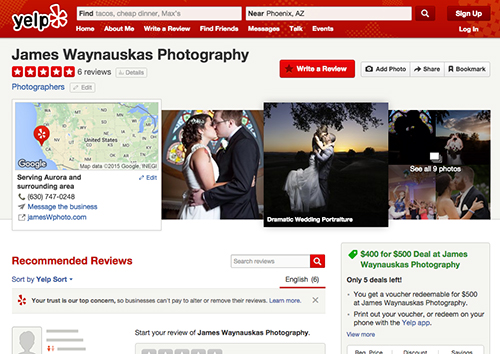 |
Yelp attracts your biggest fans and critics. |
Other review sites that are popular include Google and Yahoo as well as industry-specific sites such as The Knot and Wedding Wire for weddings.
How to Request Reviews
There are varying opinions with regard to requesting reviews. Here are my thoughts.
You should only request a review once the business transaction is finished. All photos should be delivered, any retouching should be done, and all payments should already be made.
Bear in mind that what a client may view as a good review may actually bring your average review down. For instance, in the not-so-distant past, I did a job and thought it went well. The client was very complimentary on the two days I was working. I even stayed late to capture a desired shot without asking for any additional compensation. I truly felt that I went "above and beyond" and would be receiving a great review.
The client left me a very complimentary review, all praise and nothing negative, and gave me 4 out of 5 stars. The problem was I had a perfect 5 star average rating, and the review I was excited to receive brought my overall rating down!
It's important to remember that you'll never keep everyone totally happy and even the happiest customers may not understand that a 4 out of 5 rating can hurt a business. I usually wait and hope a client asks if I would like them to do a review and if so, on what site. There are times where I feel a job went so well that I ask even if it's not offered, but there is no guarantee that I will get the review I'm hoping for.
Fake and Negative Reviews
You may be tempted to ask people to give you fake reviews. There are even companies that offer positive reviews for a fee. Never do this. It is a terrible idea. The major review sites, especially Yelp, have algorithms to filter out reviews that appear to be fake ones.
Unfortunately, this can affect real reviews. The criteria they use isn't made public, but it has been noted that someone who just created an account and then posts a positive review gets filtered out quite often. The best-case scenario for you as a business is to have a client who is happy with you and who is already an active reviewer.
Eventually you are going to receive a negative review. The common thought is the best thing to do is to reply to the review with a polite apology and explanation for future clients to see. You should never be rude or place blame on the client.
If you receive a review you feel is inaccurate or fake, you can dispute it. When you dispute a review, the site will contact the reviewer to try to verify it. If you have a negative review from the past and see that it's the only review the person ever posted or that they haven't been active on the site in years, you should dispute it. If the reviewer doesn't respond to the inquiry the review will be removed.
References
When a client requests references, make sure to ask permission before giving out anyone's contact information. It's important to provide references, but also make sure they are going to be positive. You remember how your jobs went and which people were completely happy. Those are the people you should ask to provide a reference for you.
Try to get four or five people that are willing to provide references, and its best to make sure at least a few of them are willing to speak on the phone as opposed to responding to email. Great references can ultimately determine whether or not a client books you.
Web-based marketing can be an important and effective marketing tool for your photography business. It's easy because you are using your own Web site to market yourself.
Directories
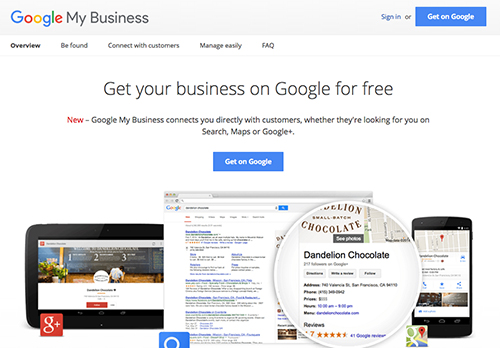
A big part of getting your name out there is getting listed in directories. It's best to be listed in as many as possible to make it easier for people to find you and build your online presence. There are general local directory listings like Google Businesses and the Yellow Pages and industry and genre-specific directories like The Knot and Wedding Wire.
Getting listed in local directories should be free, for the most part; industry and genre-specific directories usually involve a fee. All your directory listings should point to your Web site.
Search Engine Optimization
One of the most prominent ways to get your Web site in front of clients is Search Engine Optimization, also known as SEO. The basic idea involves having a large amount of relevant content on your site while using the right keywords.
There are companies that specialize in search engine optimization and there are plenty of books and Web sites that you can read if you want to try your own hand at writing SEO-friendly content. You need to write incorporate phrases that people may search for your specific business into page title, page headers, and page content. (A site that provides a good introduction to SEO is Search Engine Land, with its famous Periodic Table of SEO Elements.)
For example, if you are an event photographer in the San Francisco Bay Area, some relevant phrases for your site might include: "Bay area photographer", "Wedding photographer Marin county", or "affordable wedding photographer Oakland", depending on how specific you want to get with your customers.
Paid Search Advertising
Another option to get your listing higher in the search rankings is pay-per-click marketing. When you do this, you create an account on a search engine's pay-per-click platform (such as Google Adwords) then select keywords that you want your site to be in the top results for.
|
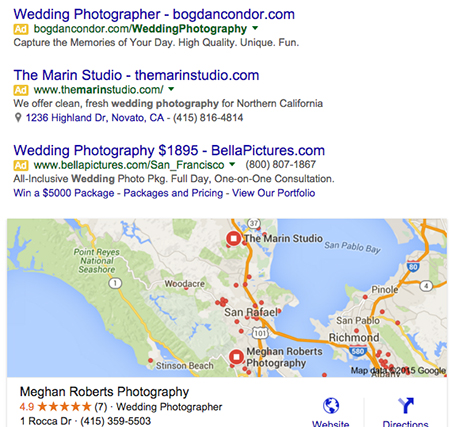
A Google search for "Marin County wedding photographer" |
You then select a price you are willing to pay if someone clicks on your site as a result of the program. For instance, your keyword may be "Wedding Photographer for the Geneva, Illinois area", and you're willing to pay $1.00 a click.
If you see that doesn't get you on the first page of the results, you can up your bid until you do end up in a position you want. It is important to remember that when your listing does come up in this way, it is at the very top or on the sidebar and is labeled as a sponsored listing.
Social Media Marketing
Social media is quickly becoming one of the most effective Web-based marketing tools. most customers today are active on social media platforms now and many of them are active on multiple networks. You should create pages for your business on all of the major social networks such as Facebook, Twitter, and Instagram.
A key to marketing this way is continuous posting to keep your friends and followers aware of you and your work. If you are trying to build up a following on social media, you can use sponsored posts and targeted ads.
Social networking sites such as Facebook allow you to target customers with specific demographic profiles or "demographic." For example, you may wish to target the profile "female, Chicago area, age 20-35" if you are looking for wedding clients.
A sponsored post is when you choose to pay to have a post show up in a certain demographic's feed. A targeted ad is when you create an advertisement with a call to action that shows up in a selected demographic's feed.
In a post or ad, you can use a call to action such as "visit my Web site" (providing a link to your site) or you can ask the user to "like my page" when they click the ad. I have found this type of marketing to be very effective, especially if you do it on a regular basis.
Direct Mail and Email Campaigns
Direct mail and email marketing campaigns can be effective ways of getting your name out and raising awareness for your business. If you choose direct mail, create a postcard that shows examples of your work, a description of you and your business, phone number, and Web site information. If you don't already have a mailing list, you can purchase lists of certain demographics and send the postcards out.
As with social media, it is important to continue direct mails. You need to do campaigns rather than a one-time message. It's all about building up awareness of yourself and what you offer. You shouldn't expect to see a big spike in work right away, but if you stick with a consistent campaign you should see a gradual increase.
The online version of direct mail is an email marketing list. Email marketing service providers such as MailChimp and Constant Contact can assist you with creating and mailing out email campaigns in a similar manner to direct mail. You can schedule mailings ahead of time and see stats on things like who read your message and who clicked your links.
MailChimp is the most prominent and, I would say, the one most suited for a new user with a free tier. On these sites you are expected to build your lists yourself and obtain permission from anyone you include in your list.
Selling Prints
Prints are another area where a photographer can make money. To begin, when you shoot an event you can look into selling prints to the attendees.
As I mentioned earlier, when I began working professionally, an event photographer typically made more money from print sales than from fees for coverage. The photographer would keep the negatives and if someone wanted a copy, they would have to pay the photographer for a print.
My grandfather-by-marriage was a successful wedding photographer. On more than one occasion, he didn't make any money shooting a wedding because the couple broke up and didn't buy any prints!
Nowadays, the majority of clients want digital files and the bulk of the money photographers make has shifted to fees for coverage and for providing those files. However, giving your clients the files doesn't prevent you (with their permission) from selling prints to the other people who attend the event.
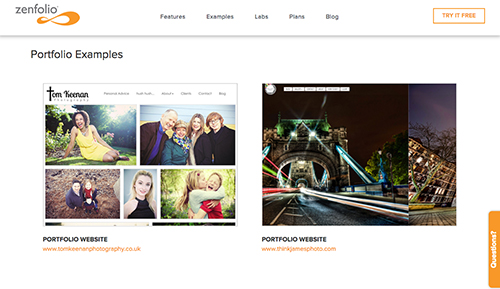
Oftentimes, your clients don't have time to share the files with everyone that attended their event or just don't want to be bothered with it. You can offer to put the photos up on an image-hosting site, such as SmugMug or Zenfolio, and direct the guests to the folder for the event to sell prints. Many image-hosting sites allow people to purchase prints on the site.
When selling prints, you have to decide whether you want to make your own prints or have a third-party printer make them for you. You can choose to have a third-party printer make your prints, but drop ship them so the return address is your own and not one of a different business.
I used to do my own prints at home but printers require a lot of maintenance and ink prices add up unless you are buying in bulk. Therefore, unless you are doing a high number of prints, I would recommend developing a working relationship with a professional lab whose output you are happy with.
Printing yourself does give you more control, but professional labs are experts at printing and should be able to duplicate or exceed any quality you are able to do on your own. Of course, this is in regards to event photography where a large number of prints are involved.
Selling Products
Products with photography have become more and more popular lately. Fortunately, sites like Redbubble, Café Press, and Shutterfly offer a variety of products that can be customized with photography.
Some of the more popular items are clothing, calendars, blankets, mouse pads, phone cases, cigarette cases, flasks, and kitchenware. You can order products and try to sell them or have them for sale online on an on-demand basis.
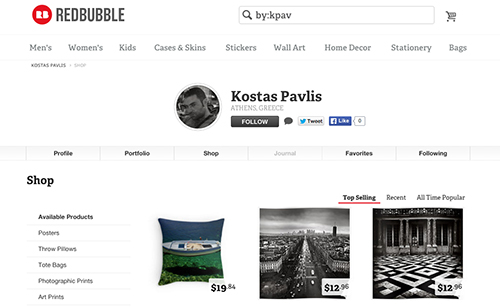 |
Your customers may be interested in products featuring your event photography, such as this page at Redbubble. |
If you are looking to get into the photography products business, you'll need to decide whether you're more interested in having a third party doing the production or doing it by hand yourself. The positive aspects of using a third party are that it is much less work for you and often cheaper.
All you have to do is upload the photo, select the products, and then pay. When making handmade products, you need to find the products, figure out your options as to how to get your image on the product, and then carry out whatever process you decide upon.
The benefit of being able to call your product "handmade" and having a more unique look may outweigh the convenience of using a third-party company, or you may feel the time saved is worth it in the long run.
Once you have your products, you need to figure out where to sell them. The most prominent place right now is Etsy. It has a large customer base and a large variety of artists selling their work.
You can also choose to go with a third-party company that does the production. Many of them have the option to have a store where your merchandise is available to be ordered and produced on demand. Etsy has listing fees and third-party stores take a cut of the sale.
Another option is having your own dedicated Web site for selling your products. If you reach a certain level of success, this is a great option and gives you a greater amount of control.
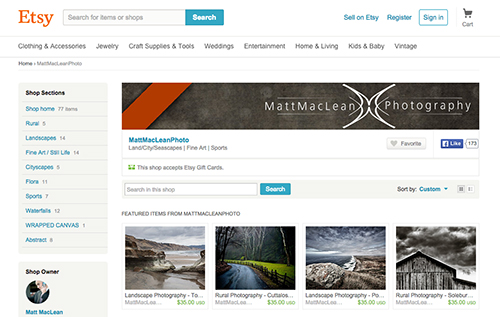 |
The photographer Matt Maclean sells a range of his work on his Etsy page. |
You can also go out into the real world and find places to sell your work. Art fairs and festivals are a great place for selling these types of products. You can inquire at local stores and find out whether they'd be willing to sell your work on a consignment basis.
As I have mentioned before, it requires being more than a great photographer to be successful. You need to be dedicated to finding ways to promote yourself and ways to generate income. This business is as competitive as ever and will only get more competitive as time goes on. There will be times you fail and times you succeed, but with effort and dedication you can make it a career.



 Gain a professional perspective on finding your niche as a photographer.