Lecture Topics
In this lecture, we will discuss the following topics as a foundation for your research and creative work.
What is Professionalism?
And Who Sets the Standards
In order to succeed professionally, most of us accept that we need to be professional. But who decides what professionalism actually is, and what it means for an artist or designer?
The idea of professionalism is associated with the emergence of trade associations in the 18th and 19th century. As the skills required to become a doctor, dentist, lawyer, or engineer (to use some recognizable examples) became well established, trade associations emerged to provide organizational support and information for people in each field. These organizations defined the expertise required and the behavior expected of their members.
The word "professional" has come to mean both what you know and how you conduct yourself. There's even a generally accepted notion of the level of professionalism that we expect from companies and their representatives, regardless of what they do.
For example, in this LinkedIn article 10 Characteristics of Professionalism, the author defines professionalism as appearance, demeanor, reliability, competence, ethics, poise, phone etiquette, written communication, organization, and accountability. Anyone who scores 10/10 on those factors must be a professional! (LinkedIn's mission is "to connect the world's professionals to make them more productive and successful.")

A counterexample from LinkedIn
Who sets the professional standards for designers? While there is no national or state licensing organization for art and design professionals, we are fortunate to have several organizations to whom we can turn for the standards, guides, tools, and resources that are widely accepted as the industry standards and best practices.

Two organizations setting the standards
Professional Organizations
The unquestioned pillar of design industry standards in the U.S. is the American Institute of Graphic Arts: AIGA.org. AIGA was founded in New York City in 1914 by 40 graphic artists in the publishing industry. Here's how design historians Steven Heller and Nathan Gluck describe the period:
Professional "designers" emerged from the large print shops to make order out of the visual clutter that characterized the ephemera of the 19th century. Though new technologies gave rise to new, more sophisticated standards of graphic presentation, some practitioners harkened back to simpler times when typography was a high art... The renaissance men who led the way, among them Daniel Berkely Updike, Frederic W. Goudy, and W. A. Dwiggins, soon became the most active members of an institute created for the propagation of their ideals and the exhibition of their wares.
Note
The American Institute of Graphic Arts provides standards, guides, tools, and resources to help you plan and run your design business.
For more than 100 years, AIGA has grown into a national organization with local chapters that provides the standards, guides, tools, and resources that are widely accepted as the industry standards and best practices. (For more information, see https://www.aiga.org/history-timeline).
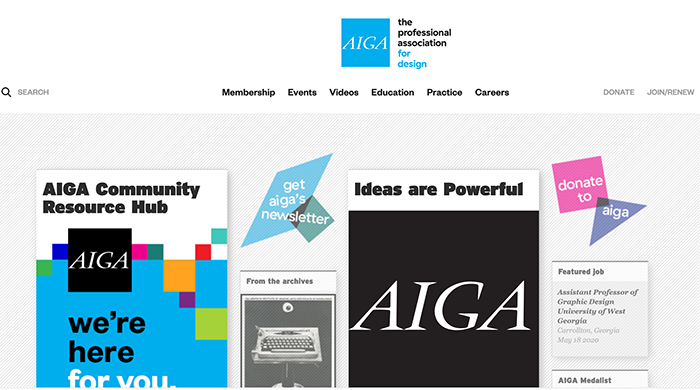
Since 2005, the AIGA has been "AIGA, the professional association for design"
The AIGA defines the Standards of Professional Practice for Designers. We will be exploring these concepts throughout this course.
The AIGA is a great resource for every aspect of planning and running your art or design business. You can find resources to help you plan your business model, create documents, research industry trends, and more! We will visit AIGA again when we take a deeper dive into professional ethics in this lecture.
Why do we need industry standards? Industry standards create uniformity of definitions, characteristics, processes, and practices, to assure the highest quality service and experiences for all parties involved. For example, as an entrepreneurial designer you will need to have your own forms and collateral and you want them to be as clear and useful as possible.
Another pillar of industry standards and an excellent resource is the Graphic Artist Guild (GAG), a national organization founded in 1967, which serves a broad range of artists including illustrators and textile designers. I highly recommend that you add the Graphic Artist Guild Handbook to your personal collection; the handbook may also be found online in a free PDF format.
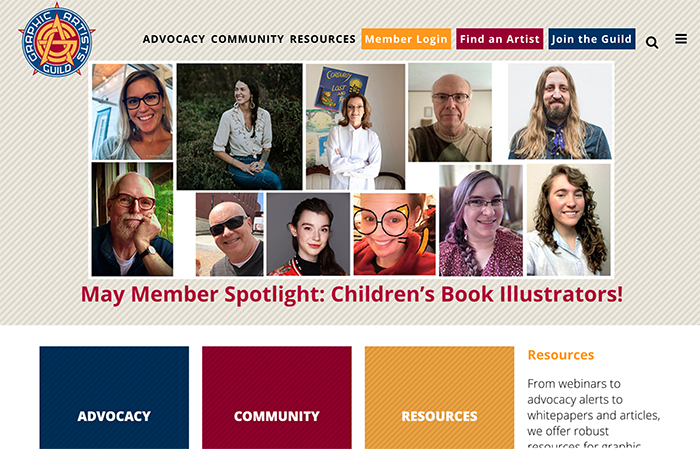
The Graphic Artists Guild has a wide range of events for members.
How will we use these industry resources as a tool for best practices? In this lecture, we will begin at the big picture, business strategy level, and discuss how you interact with the world in the ways that you promote yourself—through your promotional collateral, marketing, networking, and relationship building.
Back to Top
Developing a Business Plan and Model
In this section, we'll talk about the importance of creating a business plan and developing a business model.
As a creative, you may have heard these terms before. And you might have thought:

Take me back to art school.
However, there is another way to look at this. According to the U.S Bureau of Labor Statistics, the organization that compiles all data on employment trends in this country, 22% of graphic designers in 2018 were self-employed.
According to the Bureau, many graphic designers work in small teams and their schedules "vary depending on workloads and deadlines... Those who are self-employed may need to adjust their workday to meet with clients in the evenings or on weekends. In addition, they may spend some of their time looking for new projects or competing with other designers for contracts." (See Occupational Outlook Handbook: Graphic Designers.)
Undoubtedly, you've encountered freelancers and entrepreneurs who will tell you "don't quit your day job." However, if you want to succeed in the design field, and particularly if you want to have a career as a freelance designer working independently or with teams of colleagues, it pays to understand how businesses work, and to start to think of yourself as a business.
The truth is that many creative people begin their careers with no plan or business model in place and then wonder why their business and finances are in such chaos. Failing to plan is indeed planning to fail.
On the other hand, creating a well-researched, properly executed business plan can help you guide the growth of your business every step of the way. You will be able to cross-check every choice you make back to your plan as well as use milestones to reassess your strategies and change your plan along the way if need be. So let's discuss how it's done.
What Is Included In A Business Plan?
A business plan begins with a clear understanding of the niche and focus of your business and your target market, before it becomes more detailed, to include marketing strategies and day-to-day operational planning, as well as a growth strategy.
Typical business plans for art/design and other creative companies include some, if not all of the following:
- Mission, vision, and value statements
- Products and services
- Target market identification
- Competitors/analysis of industry and trends
- Location/range of delivery of products or services
- Description of the problem(s) that you solve
- Your Unique Selling Proposition (USP) or differentiation (how you stand out from competitors)
- Operational plan
- Technology and facilities
- Marketing plan
- Financial plan
- Growth strategy and milestones
When you write a business plan, your research will lead you to a wealth of resources for different ways to craft and organize your business plan as well as different elements to include. Creating your business plan is not done by simply making assumptions or wishful thinking. You want to really roll up your sleeves and spend time researching the options, data, and considerations for each element of the business plan before moving on to the next. This research is the foundation on which your thriving business is built and how you plan, strategize, and grow—through knowing, rather than assuming or hoping.
What is a Business Model?
Note
A business plan is a well-researched strategy that guides the direction of your business; a business model is all about how you are going to get there.
Up until now, you may have thought of the ideas of a business plan and business model as being two names for the same thing. In fact, the business plan is a well-researched, overarching strategy, a road map for where you are going, and why. A business model is all about how you are going to get there. In its simplest terms, a business model, in the words of Moneyball author Michael Lewis, is "how you plan to make money."
As you will soon see, a single company or business could choose to follow many different types of business model. To illustrate this, let's look at just a few of the different business models a web designer might choose from:
- Creating and selling web templates. Design templates for other designers to use, and get paid per download or per license of the template.
- Doing B2B web development. Design websites and or interfaces that businesses use to order products or services from each other.
- B2C subscription-based web development and upkeep model. Design a website for a company's customers and get paid a monthly fee for making changes or updates.
- B2C project-based model. Design a website for a company's customers for a one-time fee. Let someone else take care of the maintenance later on!
- Hourly billing model. Provide a range of services on demand and charge an hourly rate.
- Subcontractor model. Develop relationships with other creatives or business partners who will bring me in on projects as part of a team.
As you can see, there are many different business models for simply working as a web designer. The core task may be the same (HTML, CSS, and many trips to Starbucks) but everything else can vary widely: how you get business, how often you work, what you work on, how much control you have over your work.
For more information on how to think about business models, see this Harvard Business Review article What is a Business Model?
When you begin to research different business models, you need to decide which is the best fit for your niche. The insights you gained in creating your business plan will have already laid the groundwork for a better understanding of what problems you are solving and for whom.
The way in which you deliver your goods or services is just as important as the service itself and must provide room for growth. In your researching you will typically see growth referred to as "scaling."
Let's look at an example of scaling in action. Think about Netflix, a company that started out in 1998 as a pay per use model, mailing movies and games on disks to customers. One year later, they switched to a subscription-based model, offering a set number of disks at each price range. Nearly 10 years later, they changed to a streaming on demand model, and with the emergence of Hulu and Prime adjusted once again to become a premiere content creator.

Netflix was a company that scaled by changing its business model.
Netflix began life as a company not much different than the late movie rental store Blockbuster. And yet in less than 20 years, Netflix had eclipsed Blockbuster and turned itself into a media powerhouse. Could it have done this if it had not continued to evolve its business model? You can read the Netflix and Blockbuster story here.
With scaling in mind let's look at some of the business model types you will discover in your research as a successful entrepreneurial creative. Your research into business models will just be a starting point—go deep and especially research innovative creatives and their business models to stay ahead of the curve of your competition.
Keep in mind that your business model should contain legal considerations such as your licensing practices and copyrights. As you look at the business models below, keep in mind that this is just the tip of the iceberg! There are many different types of business models, and combinations of them, with new ones emerging every day!
A starter list of business model types you will discover:
- Royalties/Affiliate. Pay royalties to a larger organization or smaller affiliate to sell your products/services to others.
- Brokerage. Bring together buyers and sellers and charge a commission for the connection. An example might be connecting skilled creatives to outsource design-based jobs.
- Bundle. Bundle related products and services together. With your logo design, we offer website services!
- Pay as you go. Charging per hour or project.
- Freemium. Offer basic service or content for free—and charge more for premium features. Many apps do this.
- Subscription. Charge recurring fees and provide ongoing maintenance, products, or services.
- Education business model. Pay for teaching or training others.
- B2B. Business to business model, such as selling to a large organization or doing outsourced work for larger organizations.
- B2C. Business to customer, such as selling directly to a small business owner, private individual, organization, or event.
Now, I mentioned that business models are always changing. If you ever visit a technology hub like California's Silicon Valley, you will meet many entrepreneurs who are obsessed with developing the next hot business model. While nothing under the sun is truly new, it's good to pay attention to current and emerging trends in business and think about how a business model evolves.
For example, what is the business model for the taxi service Uber? Is their business model a ride share service, an on-demand transportation service, or simply an on-demand service?
Here are some ways to think about innovative trends in business models:
- Innovate the experience. Uber and AirBNB are excellent examples of business models that took an innovative approach to the experience, by sharing someone's ride or house for a while.
- Monetize data. Consider how Google and FaceBook have the monopoly on data in the customer information sectors. There are opportunities for creatives to do the same. For example, the International Color Consortium is the go-to source for all things color-related. (Though they might consider meeting up with a Web design consortium.)
- Access model. Simply serving as a gatekeeper to networking, resources, services, and curated collections in a niche is an example of the access model.
- The mashup. Looking at existing business models and unmet customer needs can lead to an innovative business model mashup.
Models for scaling
Up until now, you may have thought about your career as a freelancer or creative entrepreneur as always "trading hours for dollars." That is not the goal of a successful business model, though. You want to plan your business to be scaled. How will you grow your business over the next few years? What milestones will you set and work towards to help get you there?
Here are some ways you could scale your creative business:
- Hire employees and contractors to share the workload and increase output.
- Increase perceived value to charge premium prices for your premium service.
- Outsource basic elements of your business to lower costs and free up time.
- Commoditize; make your service a product.
- Create a single solution that can be packaged and resold over and over again to multiple clients.

Plan on how you can scale your business and to expand it in the future.
Drafting Your Business plan and model
Through your research in this course you will discover that there are a wide range of business plan templates. Some can be extremely in depth and detailed. While you do want to do the solid research to back up your plan, you also want it to be easily reviewed and followed as you execute it.
Don't let yourself be overwhelmed by some of the more in-depth business plans you might discover. While you can opt to use a traditional text-based business model for your draft, you might also want to explore the increasingly popular business model canvas.

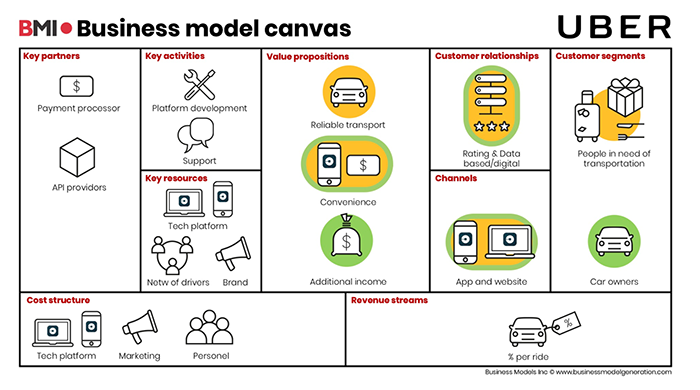
An example of a business model canvas
The business model canvas is a more visual way of succinctly organizing your business planning. It utilizes "building blocks" for the core elements of your business model and visually organizes them in a way that empowers business model conceptualization.
Simply put, when you can visualize the building blocks of your business you can better use that insight. In addition to the business model canvas structure, you might want to research the lean canvas, which is an even more streamlined one-page business model document.
OK, let's say you are armed with a compelling business plan and a viable business model. What else do you need to operate as a professional? This is where form meets function...
Back to Top
Creating Functional Collateral
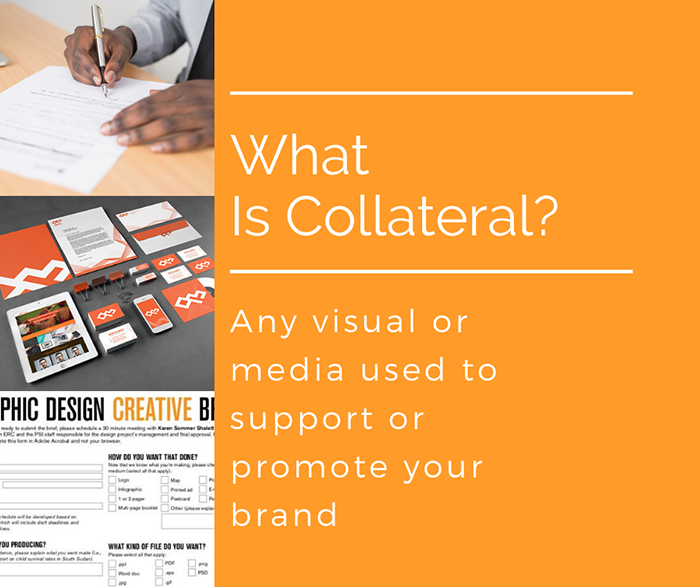
The business forms, marketing collateral, and other documents that support your design business need to be functional, on brand, and legally accurate. In this next section we will explore the basics of using brand collateral, business forms and best practices, and identify core legal requirements to create highly functional collateral.
AESTHETICS OF COLLATERAL
In our digital, remote working industry, your clients will probably spend as much time, if not more time, interacting with your forms and other printed and digital collateral than with you in person. It's vital that all of your collateral accurately reflect and represent your brand. You want to inspire confidence and professionalism with well-designed and highly functional materials through all stages of your business interaction with your clients.
The first step in this process is to have your brand standards defined and organized. You will want to use the same logos, colors, fonts, and text formatting hierarchy across all brand collateral. (Refer back to everything you learned in DES 302: Beyond Branding to refresh your understanding of choosing your core brand elements.)
Here are some places where you can expect to utilize your brand collateral:
- Your website
- Social media and content creation
- Print and digital marketing materials
- Brand identity, forms, contracts, design briefs, invoices, and business-related materials
Note
It's essential that printed and digital collateral are aligned with your brand.
Once you have gathered together your core brand elements; logo, color schemes, and fonts, you are ready to begin researching industry standards for creating highly functional collateral. As you do, remember that every detail in the design and presentation of your forms and collateral is evidence of your design expertise. Use proper formatting and layout to create beautiful, on brand, and highly functional collateral.
What Could Go Wrong?
There is an old saying: "It's easy to create a form, it's hard to get people to fill it out." Whether we are talking about design briefs, questionnaires, quote requests, forms, or customer facing content of any kind, poorly designed collateral can break your business. One typical issue is simply a breakdown in communication. Your collateral should be designed for clarity of communication and functionality first and foremost.
Important
Your collateral should maintain effective communication and functionality to support your business.
With your functionality in place, you then want to ensure that your documents adhere to legal requirements. As a designer, creative, or other commercial artist, you want to understand legal rights and protect your work. When you create documents such as proposals, briefs, contracts, and agreements, you want to be very clear about the legal implications of not only your wording but also what to include.
When we explore this in your course project, we will return to AIGA to review their Standard Form of Agreement for Design Services. As you will see, this is not a one-size-fits-all document but rather your starting point for creating your own documents that meet your unique needs but also adhere to the industry standards.
Sifting Through the Choices
As you research examples and inspirations for typical design industry documents you will find an almost unlimited variety of options! A good practice is to do your research, save examples that you like, and then sit down and compare them against your typical needs and practices. You will find certain verbiage that works particularly well for your needs as well as discover what does not work. Then you can make your own custom document based on what you have learned through your research and your own experience. Double-check document plans against industry standards and legal considerations before finalizing the setup and design.
What documents will you need to grow and support your business? The Graphic Artist Guild offers a wealth of free document downloads. As you look through these, you will likely see many you have already used such as a design brief, you may also see some that you have not used yet (but you will!) such as estimates and invoices. As you continue to develop your business model and marketing plan, you will discover even more forms and documents that you want to prepare to support your business.
In our course project, we will work together to design the following forms and documents:
- Standard Agreement
- Estimate
- Invoice
- Client Questionnaire
Back to Top
Marketing Your Freelance Business
In my decades of experience of being an entrepreneur (and working with them) there is, hands down, one big mistake that most people make. That mistake is to put all of your work into creating a beautiful website, stellar products and services, and then sitting back and waiting for the customers to come to you. This eventually turns into sitting back and wondering "where are all of the customers?"
The reality is that we are all conditioned to a world that is fueled by marketing. No matter how much a potential customer is truly looking for you and what you have to offer, if you have not invested the time in positioning yourself and building relationships, the likelihood of them finding and choosing someone else over you is very high!
Note
Marketing is building relationships with your customers so they don't wind up doing business with competitors.
What is marketing?
Marketing yourself or your services as a creative is not that different from marketing any company. It begins with knowing your offer, your target market, and your vehicle for communicating and connecting your offer to your target market.
Your offer is not only your creative product or service but also the unique selling proposition (USP). What makes you better, different, or more beneficial than your competition, to your customers? As you've learned in previous courses, the target market for a smart company is not "everyone."
Who are your target customers? Clearly define your customer and their needs, and think about what we call in the marketing world their "pain points." What problem do you solve for them? Your vehicle for communication includes all of the ways you connect with and build relationships with your target market. How are you going to get in front of them and earn their trust?

A target audience: Local bar and restaurant owners who are too busy to consider repositioning their menus, flyers, and web promos.
Keys To Marketing Success
There are many ways to market yourself as a freelancer or entrepreneurial creative. You will need to figure out what works for you. Here are three principles that I have found successful.
- Understand that marketing is psychology. Confidence in yourself and your product or service is vital. Know your value and sell yourself! You also need to understand your customer and the psychology of why and how people make purchasing decisions. Customers want a benefit, a solution. They need to feel confident in your ability to provide that. They care more about themselves and their needs than who you are or what you are offering. Create marketing copy that focuses on defining and the solving the customers problems while still positioning yourself as the expert who is more qualified to do so than your competitors.
- Be consistent with both visuals and copy! A marketing rule of thumb is that customers need to see or interact with your brand at least seven times before they buy from you. You want to make sure they recall your brand/offer easily and you are building relationships and trust. Create a short list of marketing copy that clearly identifies your unique selling proposition (USP), clearly defines your customer's pain points/needs and how you solve them. Be consistent with this same message across all of your platforms and marketing vehicles. You want customers to "recognize you" immediately no matter the vehicle or platform. Being consistent with your visuals (logos/colors/fonts) and your message across all platforms ensures they will recognize you and your benefit to them.
- Build relationships. This works on three levels. As you get in front of your ideal target market, you want to consistently offer value and build authentic relationships. As you've just learned, potential customers need to get to know you and build relationships before they buy. Additionally, it costs five times more to generate a new customer than to make a client a repeat customer. Those happy customers and repeat clients are also valuable marketing tools. Referrals and testimonials from happy clients are your most powerful marketing tools!
It costs five times more to generate a new customer than to make a client a repeat customer.
Marketing outlets
Now that you are prepared to start building relationships with your target market, how will you connect and communicate with them? What marketing vehicles will you focus on? Your target market research should give you great insight into where they hang out—now you need to look for solutions and what modalities of communication they might prefer. As you look at the list of potential ways and places to connect and communicate with your target market, choose the ones that you feel will have the most value and impact and focus on them.
Don't stretch yourself too thin. Do the research to find out which marketing vehicles will help you stay connected with the most highly qualified buyers. Another marketing and business rule of thumb is that 80% of revenue comes from 20% of your customers. As you explore marketing options, keep this in mind. Do the research up front and the fine tuning along the way, to continually focus on your highest yielding 20% of customers.
Some potential marketing outlets include:
- Advertising (print, digital, radio)
- Affiliate marketing
- App development (related to your niche)
- Direct one-to-one communication (phone and messaging)
- Direct mail
- Email marketing
- Freelance platforms (general or specific to your niche)
- Guerrilla marketing
- Inbound (pod-casting, article writing, content creator, expert/Q&A answer forums)
- Influencer marketing (being recommended by influencers in your niche)
- Networking/Events
- Public relations
- Quick response (QR)
- Search engine marketing (SEO)
- Social media
- Word of mouth
Create a marketing plan
Now that you know your message, your target market, and your choices for marketing vehicles, it's time to draft your marketing plan. Look at the list of marketing outlets and do some research. There is no need to reinvent the wheel! Learn how other designers in your niche are already successfully using some of these outlets. At the same time, you want to look for ways to differentiate yourself, be creative, and stand out from the crowd.
When creating a marketing plan, look at how other designers in your field found success while developing ways to differentiate yourself.
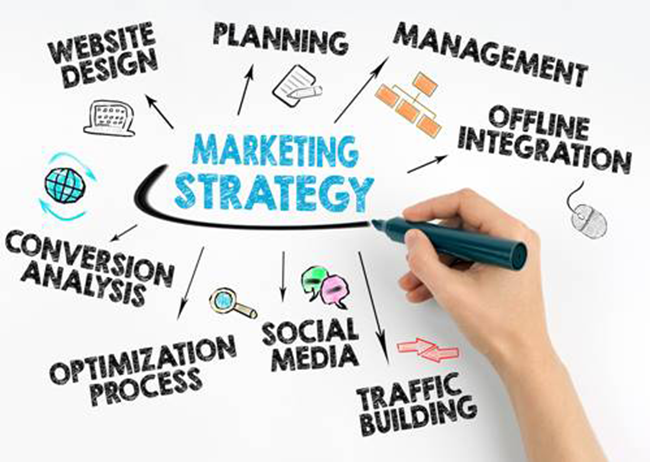
There are many ways to structure your marketing plan. As you research plans and templates you will discover that you already have many of the elements for a structured marketing plan in place such as your basic business and target market descriptions. The bulk of your work at this stage will be in exploring marketing channels and creating strategies for leveraging them.
Defining your marketing goals and milestones is your first step to drafting your strategy. Understand that there is a typical "life cycle" that a potential customer goes through before becoming a buying customer. This is also often referred to as a "funnel" or the "customer journey." Although you will see this defined in different ways, the primary steps that your customer will take are: Awareness, interest, consideration, intent, evaluation, and purchase.
While many entrepreneurs, understandably, want to jump ahead to the purchase step, your marketing strategy must consider each phase of the customer journey. Define your goals and milestones with this customer journey in mind. For example, your early milestones might include getting a certain number of highly qualified followers on Behance and building your email list and relationships. Your next milestone might be to convert a certain number of contacts with your offer, and a third might be to grow your highly qualified potential customer list by asking existing customers for referrals.
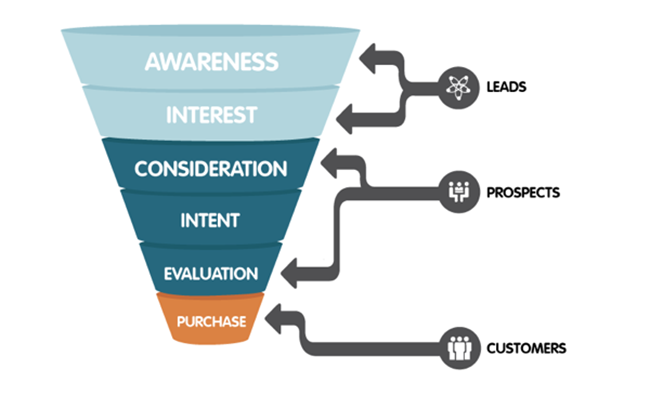
Business lead funnel by 123-reg.co.uk
As you research marketing plans, keep in mind that you want to create an overarching marketing plan (the big picture) as well as focused plans/strategies for your outlets. For example, you might have a content and email plan, a paid advertising plan, an influencer relationship building plan, a social media plan, and so on.
As you plan milestones, create a longer-range goal such as a one year goal and then milestones to hit along the way that will get you to that goal, either quarterly or monthly. You will learn as you go, too. As you work toward these milestones be sure to debrief along the way. Adjust to focus more on what is working well and less on what is not working for your unique niche and clientele.Back to Top
Establishing Your Presence in the Market
You have already learned that authentic relationship building is the cornerstone of your successful business. This happens at both the one-to-one and one-to-many levels. The one-to-one level is what we most often refer to as networking, while the one-to-many level is akin to establishing "a name for yourself." Ideally you would like people to recognize your name as an expert in your field or at least have this quickly and easily confirmed through an online or word of mouth research on the part of your potential customer or employer.
What is networking?
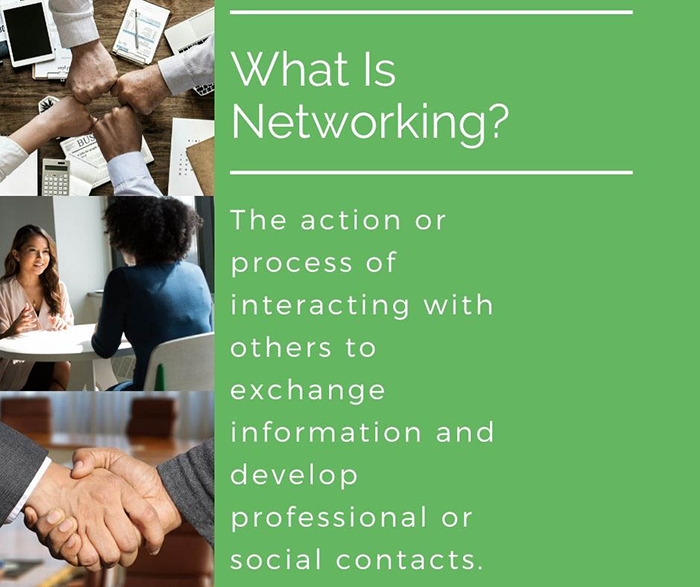
One useful way to think about networking is that it is "authentic relationship building." You can use networking to ensure that those relationships are high quality and directly focused on your niche. Networking is based on sharing. It's not only about letting others know what you have to offer but also about providing a benefit to those in your network too. Successful networking can result in new clients, new ideas, and meaningful lifelong relationships.
Note
Being able to successfully network can lead to new clients, new ideas, and meaningful relationships.
Some benefits of networking include:
- Expanding your connections and your support network of focused contacts and referrals.
- Enhancing your visibility and recognition of your expertise in your niche.
- Expanding knowledge, staying current on trends in your niche, getting answers to tough questions and gaining access to fresh ideas.
- Sharing and gaining access to vetted, valuable business resources.
- Sharing opinions and gaining new perspectives.
- Building confidence and morale.
Best Practices in Networking
As you begin your networking journey, keep an open mind, listen, gather ideas, and focus on helping others while still being confident to ask for help and guidance at the same time. The practice of networking is exponential. As you build authentic relationships, those people will be more than happy to reach out and connect you with others that they feel you can benefit from knowing. You will often be surprised where powerful networking opportunities come from.
Never underestimate the power of a connection! About six years ago, a friend of mine introduced me to CJ Gross, a life coach and trainer who was a contact in her network. She said "you guys have mutual goals and interest—I think you should meet." We planned to meet up for coffee, having no idea why or where it would take us; our paths would have never crossed otherwise. Over the years we have explored business ideas and solutions, become each other's "go to" for getting fresh perspectives and bouncing ideas off of each other, connected each other to valuable resources, built up each other's morale through challenges, and of course, become friends! You can explore more networking resources in the resources section of the course.
Here are some best practices in networking:
- Introduce yourself! The first step in networking is actually connecting—practice introducing yourself and inviting further connection.
- Be honest, authentic, and sincere—make friends not business contacts. Be intuitive and open to potential mutual benefit even if it is not immediately obvious.
- Seek quality over quantity.
- Be a good listener. Get to know what your connections are all about and ask open ended questions to learn more about them.
- Practice telling your story. Begin with your "elevator pitch" and practice letting people know what you do and why you do it in a concise and compelling way.
- Be a connector. Introduce people in your networks to each other when you feel the connection will be valuable to both.
- Ask for introductions and support. Great contacts are more than happy to help but they are also just as busy as you are. Don't be shy about reaching out to ask for introductions, resources, and support.
- Stay organized and follow up. Create a spreadsheet or other document to organize your contact information and follow up immediately after you make the connection as well as further down the road to maintain the connection.
Establishing your presence
If you think of your presence in the marketplace as a stool, the three legs holding up that stool would be your branding/collateral, marketing, and networking. Your presence in the marketplace is not just about meeting people in person, but it's not about any other single factor—marketing, online presence, or collateral—either. They all work together.
Be prepared with your business cards and apps to share digital contact information when networking. Establish a solid online presence for your brand through your website and social media as well niche related connection platforms such as Behance. Practice your elevator pitch and sharing your "why!" Plan a smart marketing strategy with the other aspect of your brand's presence in mind. Get in the habit of interconnecting them all so people engage with you and your brand repeatedly in multiple ways, places, and platforms.
Back to Top
Advanced Research and Relationship Building
It's never too early to start building professional relationships to support and advance your creative career! With your business model in place, you will have a clear vision of where you are headed with your professional creative endeavors. It's time to start laying the foundation. With planning and research you can ensure that you are building the right kinds of relationships with the right types of people who can help you to develop and grow efficiently and in the right direction.
Research and Tracking
As you begin researching and networking you might find the wealth of options and opportunities a bit overwhelming. While it can be tempting to take advantage of every opportunity, you want to practice smart growth. This is where the business plan comes in. Refer back to your mission statement frequently. Remind yourself of where you are going and why. This helps you to more intuitively recognize the opportunities that are most aligned with your goals.
Rather than attending every event and pursuing every contact, use research and tracking to help ensure your networking efforts are well focused. Set up some type of tracking system to organize your connections. This can be as simple as setting up a spreadsheet or word document with tables or using an app to manage your professional network data. In addition to name and contact information, be sure to include links, contact follow up dates/notes and personal insights.
I highly recommend adding a "notes" column for personal reminders. This might include significant dates, details etc. If you have not connected with someone in a while it's always best to start with a personal conversation. For example, your notes might indicate that they mentioned their son was headed off to music school last time you spoke. Starting your conversation with "Hey Glenn, great to hear your voice—how's Johnny doing at that music academy" will do more to grow your relationship than "Hi Glenn, do you know anyone who works in the publishing industry?"
With your goals in mind, begin researching groups, events, and organizations that will create opportunities for you to connect with the appropriate people. The ones that are best suited to you will depend entirely on your goals. If you are seeking out an internship opportunity to learn the ropes in specific niche, you may find that attending conferences, job fairs, focused research, and cold emailing are effective. If you are seeking to grow a web design business, then events and social mixers with business owners might be the best bet for you.
As you evaluate the many ways in which to make connections, research the actual ones you are considering. Research the organizations, look at their history, and look at the profiles of members and so on, to filter out the ones that are not related to your goals. Set a clear vision in your mind for what type of outcomes you want to achieve from the network opportunity to ensure that you stay focused on it and achieve it!
You will find many places to begin your search in the resources section of this course. Look at the list below to start brainstorming your own search. Research the events, outlets, and strategies suggested to find ones that may be a good fit for you. Once you have selected a few to focus on, do a second wave of research on each particular networking opportunity to learn how to best leverage it before you dive in. For example, if you want to focus on LinkedIn, a simple internet search for "how to leverage LinkedIn" will lead you to a wealth of ideas and will make the difference between just having a profile and building powerful connections and relationships.
Some ideas for networking sources:
- General networking platforms such as Behance and LinkedIn
- Niche forums, sites, platforms
- Conferences, events, mixers, retreats, workshops
- Professional associations
- Job fairs
- Volunteering
- Apps for professional networking
- Research and cold emailing
- Social media
- Friends, family, alumni associations and current employment community
- Everyone you meet—be prepared with your elevator pitch
Building relationships
Remember, authentic relationships are the cornerstone of a successful career or business. Those relationships are built through a combination of hard and soft skills. We've already touched on some of the hard skills such as research, planning and tracking. Now that you've found "your people" it's time to nurture authentic, mutually beneficial relationships. A great starting point is to always set your intentions to build win/win relationships. This does not mean you always have to do or give something to others but simply that you are open to getting to know and understanding their needs as well as your own and help to meet them when you can.
Communication is key to building quality relationships. Let's start with the silent communication of body language; we don't often think about it but speaks volumes. Be aware of your body language, what is it saying to the other person? For example, crossing your arms is typically interpreted as a sign of aggression, dominance, or unwillingness to open up. Conversely, keeping your arms comfortably at your side shows that you are open, friendly, and interested. Researching and implementing a few key body language habits can go a long way in welcoming communication and building trust.
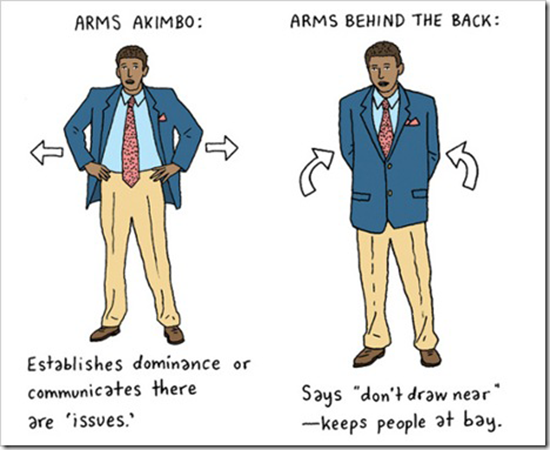
Credit: Psychologyfordesigners.com
Your speaking skills and ability to deliver your elevator pitch might be the first thing that pops into your mind when I mention "verbal communication skills" but true master communicators know that there is so much more to it than that! In fact, developing active listening skills can often be more effective than focusing on developing speaking skills to advance your relationships.
Active listening shows that you respect and care about the other person and better empowers you to support them. Active listening leads to empathy, understanding of perspective, and heightened awareness. Examples of ways you can improve your active listening skills include maintaining eye contact, not interrupting, not thinking about your response while the other person is speaking, asking questions, and paraphrasing what the speaker said to ensure you are clear on their message. Practicing and developing effective communication skills will become one of your greatest assets in networking.

Make time for people in your network.
Now that you've built that relationship don't be shy. Follow up is one of the most important parts of networking. We are all very busy and no matter how connected we may feel during an interaction, it's that follow up that makes you stand out from the crowd and continues the relationship building process. In your tracking document, make note of when you want to follow up with a promising new contact. You do not have to have an agenda, though you also don't want to waste their time. A simple thank you email or social media message saying how wonderful it was to meet them and inviting ongoing connection is a great place to start. Because you are such a great listener and planner you might stumble upon a resource that would interest them and pass that along.
There are many ways to stay connected, including social media. The important thing is to maintain and grow the relationship. Remember in the marketing section when you discovered that people need to repeatedly interact with a brand before becoming a customer? Well, networking relationships are no different. When you have an established relationship, people are much more willing and likely to be there when you need them. With that understanding though, you also don't want to be shy about asking and being direct.
Chances are, you will never get what you don't ask for, so don't be afraid to "ask." As human beings we like to be needed, we like to help, and we like to prosper in a win/win community environment. When you are ready to ask for assistance, connections, or help, approach it confidently and directly. People will appreciate that you respect their time and their expertise. When asking be brief and clear. Be patient, flexible, and accommodating. If the person is able to assist you, find out what you can do to streamline the process for them.
With all of these advanced networking and relationship building insights, you are now ready to go out into your professional world and put them into practice! As the proverb goes, "the best time to plant a tree is 20 years ago; the second-best time is now." The same holds true for your networking. Now is the time to start laying the foundations of a strong professional network.
Back to Top